
In today’s digital-first world, customer data has become one of the most valuable assets for any organization. Every click, purchase, interaction, and feedback point tells a story about customer behavior and expectations. However, collecting data alone is not enough. The real value lies in how effectively you manage, analyze, and use that data to deliver meaningful customer experiences.
This is where Customer Data Management (CDM) plays a critical role.
What is Customer Data Management?
Customer Data Management (CDM) is the process of collecting, organizing, analyzing, and maintaining customer data across multiple touchpoints. It helps businesses understand who their customers are, how they behave, and what they expect.
CDM acts as a centralized solution that resolves customer-related challenges and enables organizations to deliver personalized, consistent, and high-quality experiences. Today’s customers interact with brands through multiple channels such as:
- E-commerce websites
- Mobile applications
- Social media platforms
- Customer support systems
- Email and digital campaigns
Customer Data Management continuously monitors these interactions and stores structured and unstructured data in a unified system.
Key Benefits of Customer Data Management
Effective customer data management delivers measurable business value. Some of the major benefits include:
- Improved customer loyalty and retention through data-driven insights that enhance satisfaction, trust, repeat purchases, and long-term brand relationships.
- Real-time visibility into market trends and customer behavior enabling faster decision-making, proactive strategy adjustments, and competitive advantage in dynamic markets.
- Higher sales efficiency and conversion rates achieved by identifying high-intent leads, optimizing sales funnels, and improving sales team performance.
- Better understanding of marketing and promotional performance by accurately measuring campaign effectiveness, ROI, channel impact, and audience engagement patterns.
- Personalized customer engagement strategies powered by behavioral analytics, enabling targeted messaging, relevant offers, and meaningful omnichannel interactions.
- Sustainable, customer-driven business growth supported by continuous insights, predictive analytics, and aligned strategies focused on long-term value creation.
By transforming raw data into actionable insights, CDM enables smarter decision-making across marketing, sales, and customer service teams.
Challenges of Managing Customer Data
As customer interactions increase across platforms, managing customer data becomes more complex. Businesses often struggle with both volume and variety of data.
Common Customer Data Management Challenges
- Managing customer data manually across systems increases operational complexity, causes inconsistencies, and slows decision-making due to fragmented data silos.
- Keeping data clean, accurate, and up to date requires continuous validation, deduplication, standardization, and monitoring across multiple data sources.
- Ensuring data security and regulatory compliance involves protecting sensitive information while meeting evolving legal, privacy, and industry-specific requirements.
- Validating customer information from multiple sources becomes challenging due to mismatched formats, duplicate records, and unreliable external data providers.
- Deciding which data is valuable and which should be ignored demands strategic prioritization to avoid noise, reduce storage costs, and improve analytical accuracy.
Customers generate data continuously through online purchases, browsing behavior, social engagement, and feedback. Without a structured CDM approach, this data quickly becomes fragmented and unusable.
This is why large e-commerce companies and digital-first brands heavily invest in customer data management systems to handle scale and complexity efficiently.
Why Customer Data Management So Important?
Customer data management is the lifeline of modern organizations. It provides a single source of truth for customer information collected from various channels.
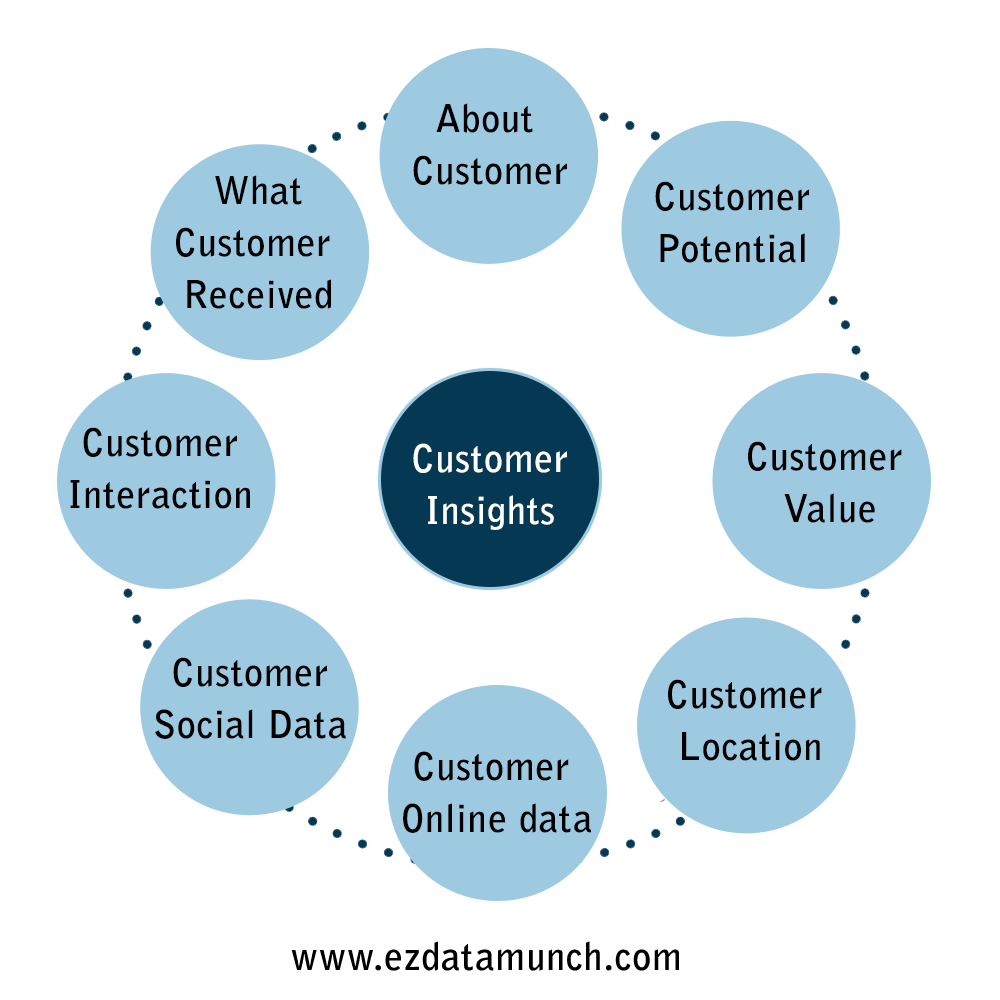
With a strong CDM strategy, businesses can:
- Confidently engage customers with relevant offers and promotions
- Deliver personalized experiences during transactions
- Understand customer preferences, buying patterns, and behavior
- Anticipate customer needs and reduce churn
Customer data is not just information it is a competitive advantage. Organizations that manage customer data effectively are better positioned to communicate, engage, and grow.
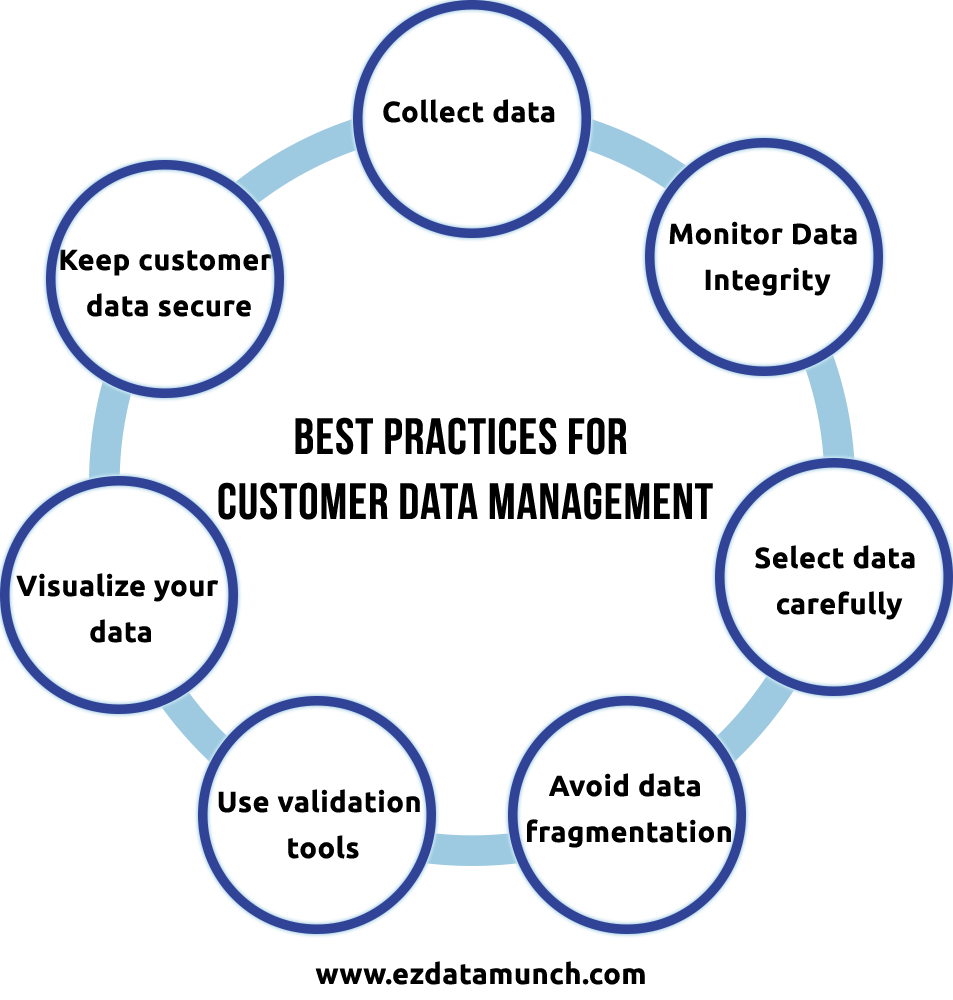
Best Practices for Customer Data Management
Best practices for customer data management help organizations collect, organize, secure, and analyze customer information effectively to improve data quality, ensure compliance, enable personalization, and drive smarter, data-driven business decisions.
- Strategic Data Collection
In the past, many organizations collected data without a clear plan, resulting in scattered and unusable information. Today, data collection should be intentional and aligned with business goals.
Best practices include:
- Collect only relevant customer information
- Use consent-based and transparent data collection methods
- Capture data from social media, websites, CRM systems, and stores
- Store data in a centralized and scalable database
A well-structured data collection process sets the foundation for long-term success.
- Monitor and Maintain Data Integrity
Data integrity is one of the most critical aspects of customer data management.
Customer data must be regularly updated because:
- Customer behavior and preferences change over time
- Contact details such as email and phone numbers become outdated
- Inaccurate data leads to poor customer experiences
Data cleansing helps remove:
- Duplicate records
- Inactive or invalid email IDs
- Irrelevant customer information
Clean data leads to more effective campaigns, better targeting, and higher ROI.
- Select Relevant Data for Accurate Insights
Not all data is valuable. As data volumes grow, selecting and organizing the right data becomes essential.
Focus on:
- Quality over quantity
- Data directly linked to customer behavior and outcomes
- Eliminating unused or low-impact data
This ensures analytics and insights remain accurate and actionable.
- Use Data to Understand Customer Buying Behavior
Customer data helps you understand:
- What customers buy
- When they buy
- How often they purchase
- Which channels they prefer
By analyzing buying habits, businesses can:
- Personalize recommendations
- Optimize engagement channels
- Reduce time spent on ineffective interactions
Understanding customer behavior allows teams to deliver exactly what customers are looking for.
- Avoid Data Fragmentation
Data fragmentation occurs when customer information is spread across multiple disconnected systems.
To avoid this:
- Use a centralized customer data platform
- Integrate CRM, marketing, sales, and support data
- Standardize data collection formats
An organized and unified data system improves collaboration and decision-making across teams.
- Keep Customer Data Secure
Data security is a non-negotiable aspect of customer data management.
Best practices include:
- Data encryption and access controls
- Role-based permissions
- Regular security audits
- Compliance with data protection regulations
Customer data is one of your most valuable business assets and protecting it builds trust and credibility.
Customer Data Management Trends to Watch
As technology evolves, customer data management is also transforming. Key trends include:
- AI-driven customer insights for predictive behavior analysis
- Real-time data processing for instant personalization
- Customer Data Platforms (CDPs) replacing siloed systems
- Privacy-first data management driven by regulations
- Unified dashboards for marketing, sales, and customer service
Businesses adopting these trends gain faster insights and stronger customer relationships.
Customer Data Management Examples
Customer Data Management examples highlight how businesses track KPIs and apply customer data insights across sales, marketing, and operations.
Marketing Performance Dashboard
A Marketing Performance Dashboard is one of the most practical examples of Customer Data Management in action. It brings together customer data from multiple marketing channels such as websites, email campaigns, social media, and paid ads into a single, easy-to-understand view.
By using customer data effectively, this dashboard helps marketing teams understand which campaigns are working, which audiences are responding, and where marketing budgets are being spent efficiently.
How Customer Data Management Supports Marketing Performance
- Consolidates customer data from CRM, ad platforms, websites, and email tools
- Tracks customer journeys from first interaction to conversion
- Identifies high-performing campaigns and low-engagement channels
- Helps optimize messaging, targeting, and campaign timing
With clean and accurate customer data, marketers can make data-driven decisions instead of relying on assumptions.
Key KPIs Tracked in a Marketing Performance Dashboard
- Cost per Acquisition (CPA)
- Cost per Lead (CPL)
- Customer Lifetime Value (CLV)
- Campaign Conversion Rate
- Sales Growth and Revenue Impact
- Return on Investment (ROI)
This dashboard allows businesses to quickly identify gaps in their marketing funnel, improve landing pages, and create more engaging, customer-focused campaigns.
Customer Performance Dashboard
A Customer Performance Dashboard focuses on how well a business is meeting customer expectations after acquisition. It is commonly used by customer support, success, and operations teams to ensure customers receive fast, effective, and consistent service.
Customer data management plays a key role by maintaining a complete history of customer interactions, complaints, feedback, and support tickets.
How Customer Data Management Improves Customer Performance
- Provides a 360-degree view of each customer
- Tracks customer issues, resolutions, and follow-ups
- Measures customer satisfaction and service efficiency
- Identifies recurring problems and improvement opportunities
This enables teams to respond proactively and deliver a better overall customer experience.
Key KPIs Tracked in a Customer Performance Dashboard
- Customer Satisfaction Score (CSAT)
- Net Promoter Score (NPS)
- Average Response Time
- First Contact Resolution Rate
- Customer Retention Rate
- Customer Churn Rate
By analyzing these metrics, organizations can improve service quality, reduce customer complaints, and build long-term trust and loyalty.
Sales Performance & Customer Pipeline Dashboard
A Sales Performance and Customer Pipeline Dashboard help sales teams track how customers move through the buying journey from lead to conversion and beyond. By using centralized customer data, sales managers gain complete visibility into customer interactions, deal progress, and revenue opportunities.
How Customer Data Management Helps:
- Maintains a unified view of each customer’s contact details, interactions, and purchase history
- Tracks lead sources and customer touchpoints across channels
- Identifies high-value customers and stalled deals
- Improves sales forecasting and pipeline accuracy
Key KPIs Tracked:
- Lead-to-Conversion Rate
- Sales Pipeline Value
- Average Deal Size
- Sales Cycle Length
- Customer Acquisition Cost
With accurate and up-to-date customer data, sales teams can prioritize the right prospects, close deals faster, and build long-term customer relationships.
Customer Segmentation & Personalization Dashboard
A Customer Segmentation and Personalization Dashboard use customer data to group customers based on behavior, demographics, preferences, and purchasing patterns. This enables businesses to deliver highly targeted and personalized experiences.
How Customer Data Management Helps:
- Segments customers based on age, location, interests, and buying behavior
- Identifies loyal, repeat, and high-risk (churn-prone) customers
- Personalizes offers, recommendations, and communication
- Improves engagement across email, SMS, push notifications, and ads
Key KPIs Tracked:
- Customer Engagement Rate
- Repeat Purchase Rate
- Churn Rate
- Campaign Response Rate
- Revenue per Customer Segment
This approach ensures customers receive relevant messages at the right time, resulting in higher satisfaction, stronger loyalty, and increased revenue.
Conclusion
Customer Data Management is no longer optional. It is a strategic necessity. Businesses that invest in structured, secure, and intelligent data management gain deeper customer insights, stronger relationships, and sustainable growth.
If you are looking to build a customer data management dashboard tailored to your business needs, platforms like EzDataMunch Customer Data Management can help you get started with a free trial.
FAQ’s
What is Customer Data Management?
Customer Data Management is the process of collecting, organizing, and maintaining customer data to improve decision-making and personalization.
Why is Customer Data Management important for businesses?
It helps businesses gain accurate customer insights, improve engagement, ensure data consistency, and drive sustainable growth.
What types of data are included in Customer Data Management?
It includes demographic data, transactional data, behavioral data, engagement data, and customer interaction history across channels.
How does a Customer Data Management dashboard help?
A dashboard provides a centralized view of customer data, enabling real-time insights, better segmentation, and faster business decisions.

Abhishek Sharma
Website Developer and SEO Specialist
Abhishek Sharma is a skilled Website Developer, UI Developer, and SEO Specialist, proficient in managing, designing, and developing websites. He excels in creating visually appealing, user-friendly interfaces while optimizing websites for superior search engine performance and online visibility.